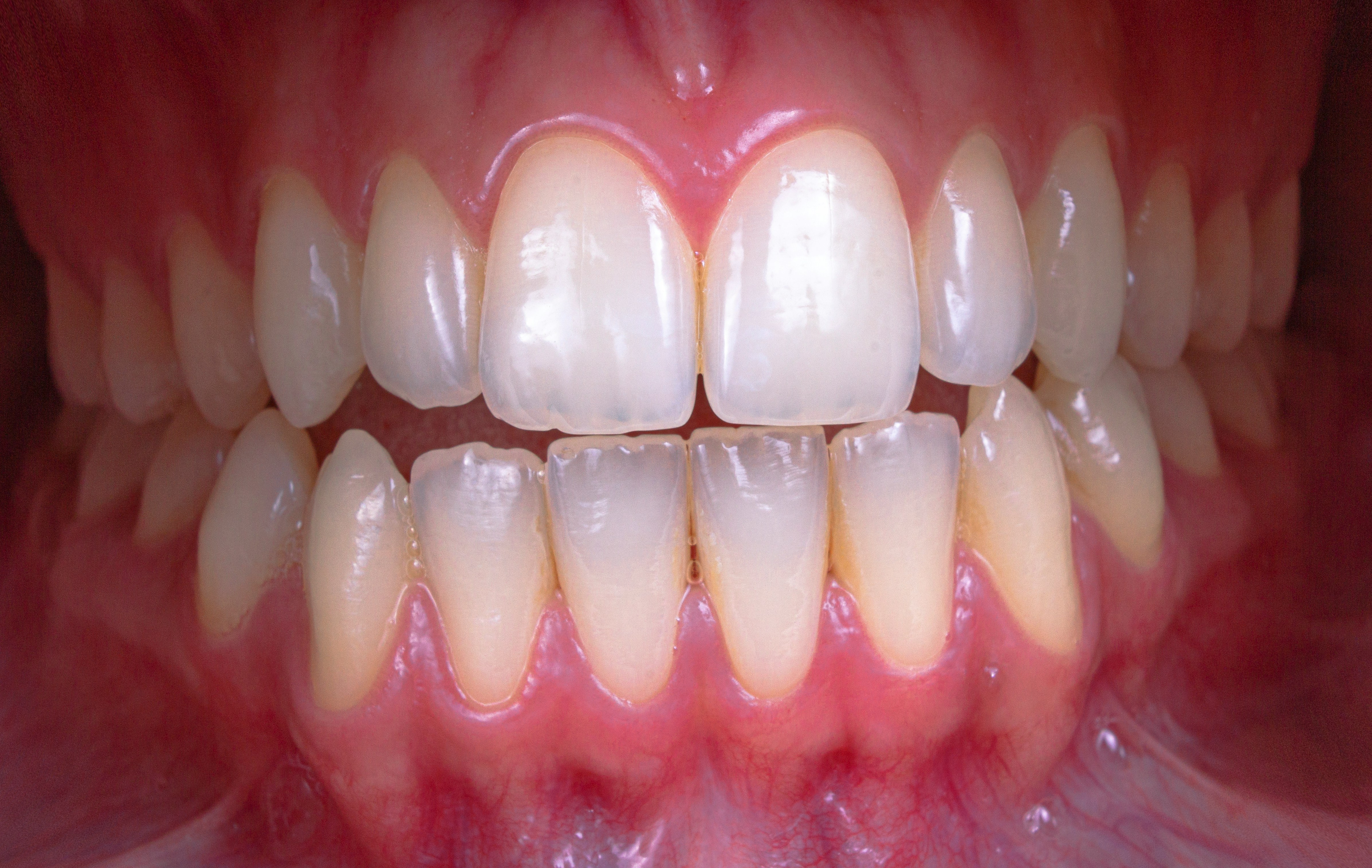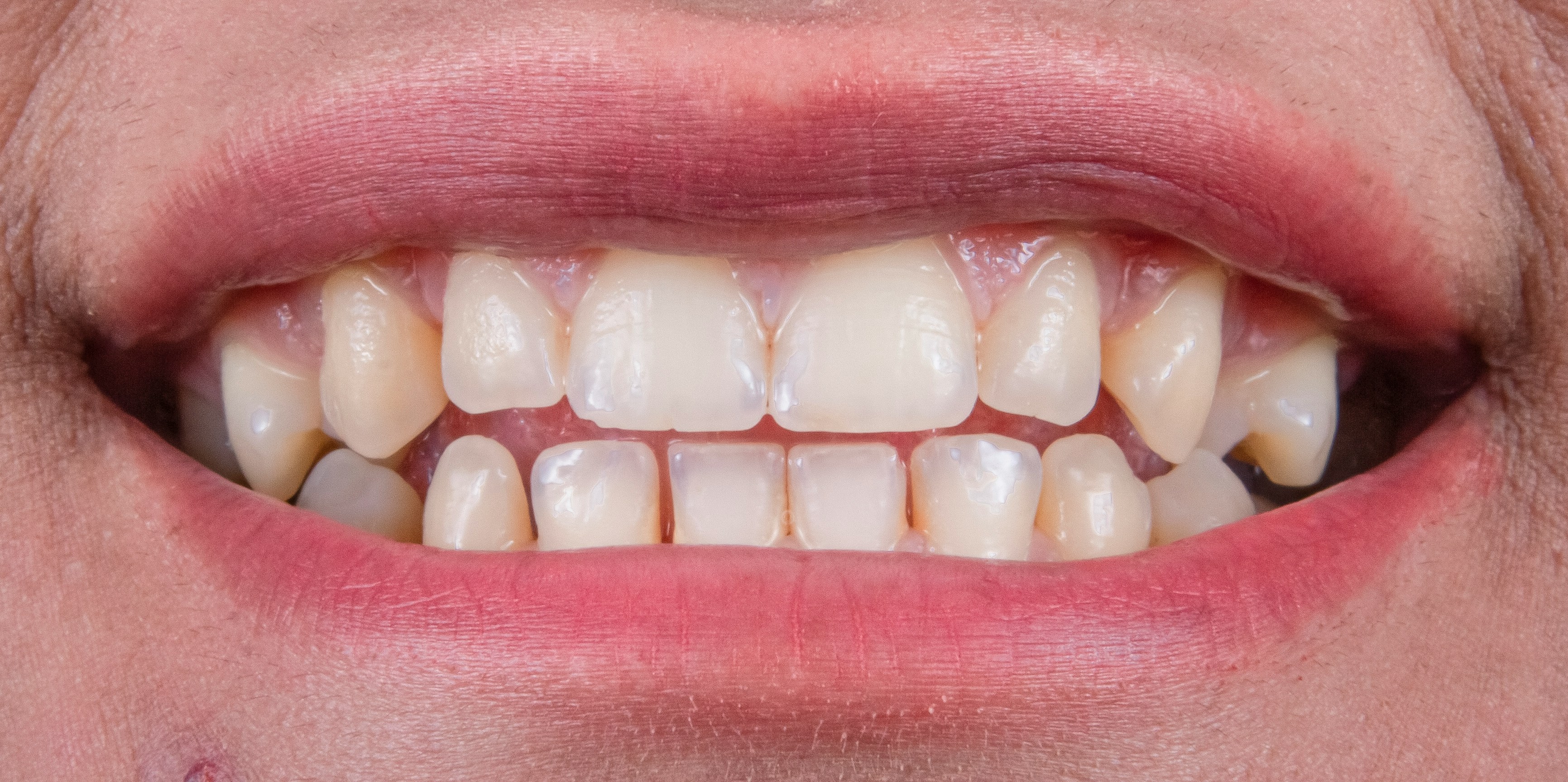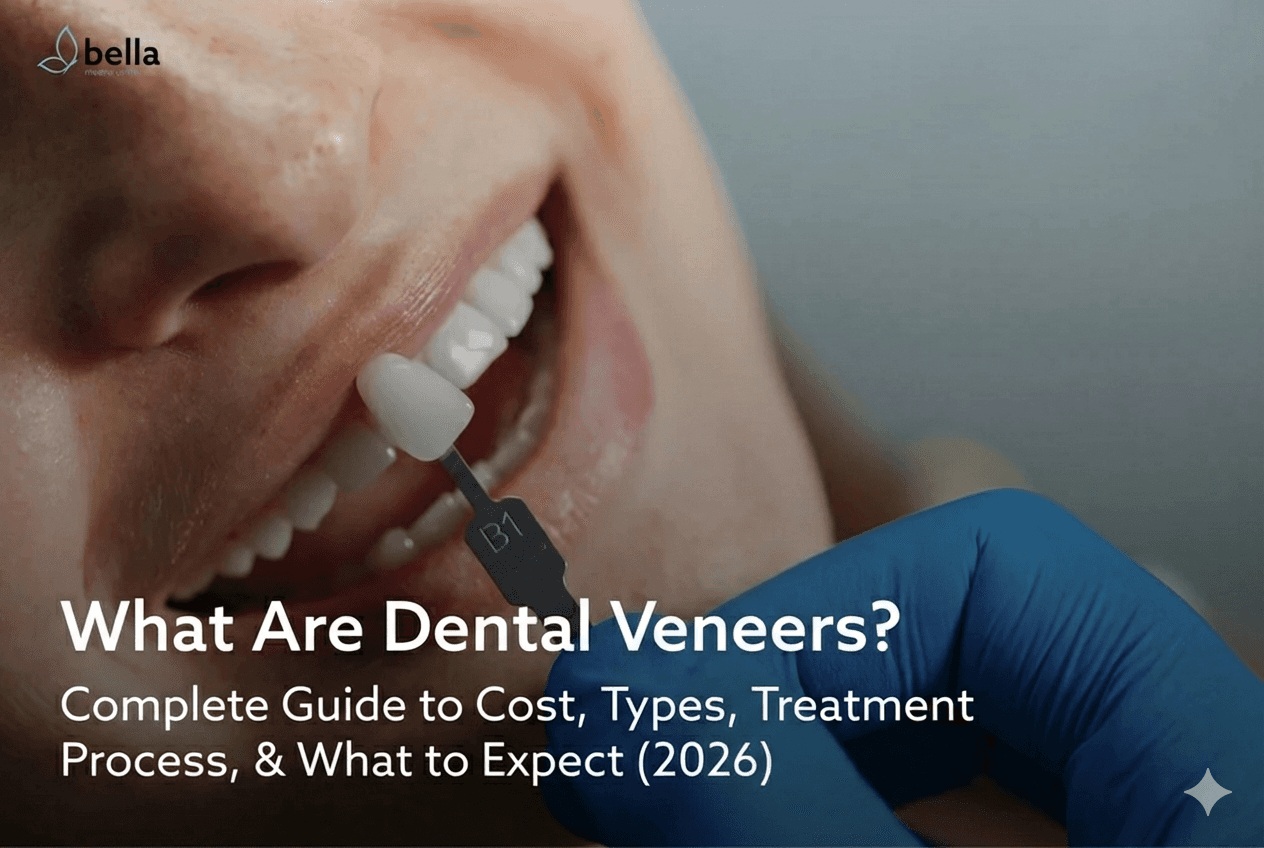
Do you have teeth that are stained, uneven, or chipped? Are you looking for a way to improve your smile? Dental veneers are a popular cosmetic dentistry solution designed to transform the look of your teeth. Here’s everything you need to know about what dental veneers are, types, cost, treatment process, and everything to expect with this dental treatment.
What Are Veneer Teeth?
Dental veneers are thin, custom-made shells that are designed to cover the front surface of your teeth. They are cosmetic in nature and can conceal imperfections such as cracks, stains, discolouration, and gaps between the teeth, ultimately enhancing the appearance of your smile.
The different types of veneers include porcelain veneers and resin-based composite veneers. Veneers are bonded to the tooth to improve aesthetics.
Dental veneers are an option for people who have stained, misaligned, or chipped teeth. Veneers can also help conceal misshapen teeth or teeth that are too small. To have dental veneers, you should be free of gum disease and extensive cavities. Consult your dentist if you have serious oral health issues before trying out cosmetic dentistry treatments.
Who Can Get Dental Veneers?
Veneers are suitable for anyone looking to improve the appearance of their smile. These dental restorations can effectively conceal:
Chipped or broken teeth
Gaps between teeth (diastema)
Stubborn stains that do not respond to whitening
Teeth that are smaller than desired
Irregularly shaped teeth
Eligibility to Get Veneer Teeth
To qualify for dental veneers, you should meet the following criteria:
Have healthy gums and teeth free from decay or extensive cavities.
Be free from active gum disease or infection.
Maintain good oral hygiene habits and regular dental check-ups.
Have sufficient enamel for veneer bonding.
Be committed to avoiding habits that may damage veneers (e.g., teeth grinding, nail biting).
Consult a qualified dentist to confirm suitability before undergoing treatment.
Note: Veneers are a cosmetic treatment, so any underlying oral health issues must be treated first. It’s best to consult your dentist, who can assess your dental condition and determine whether veneers are a suitable and safe option for you.
Dental Veneers Vs Dental Crowns Vs Dental Implants: What Are Their Differences?
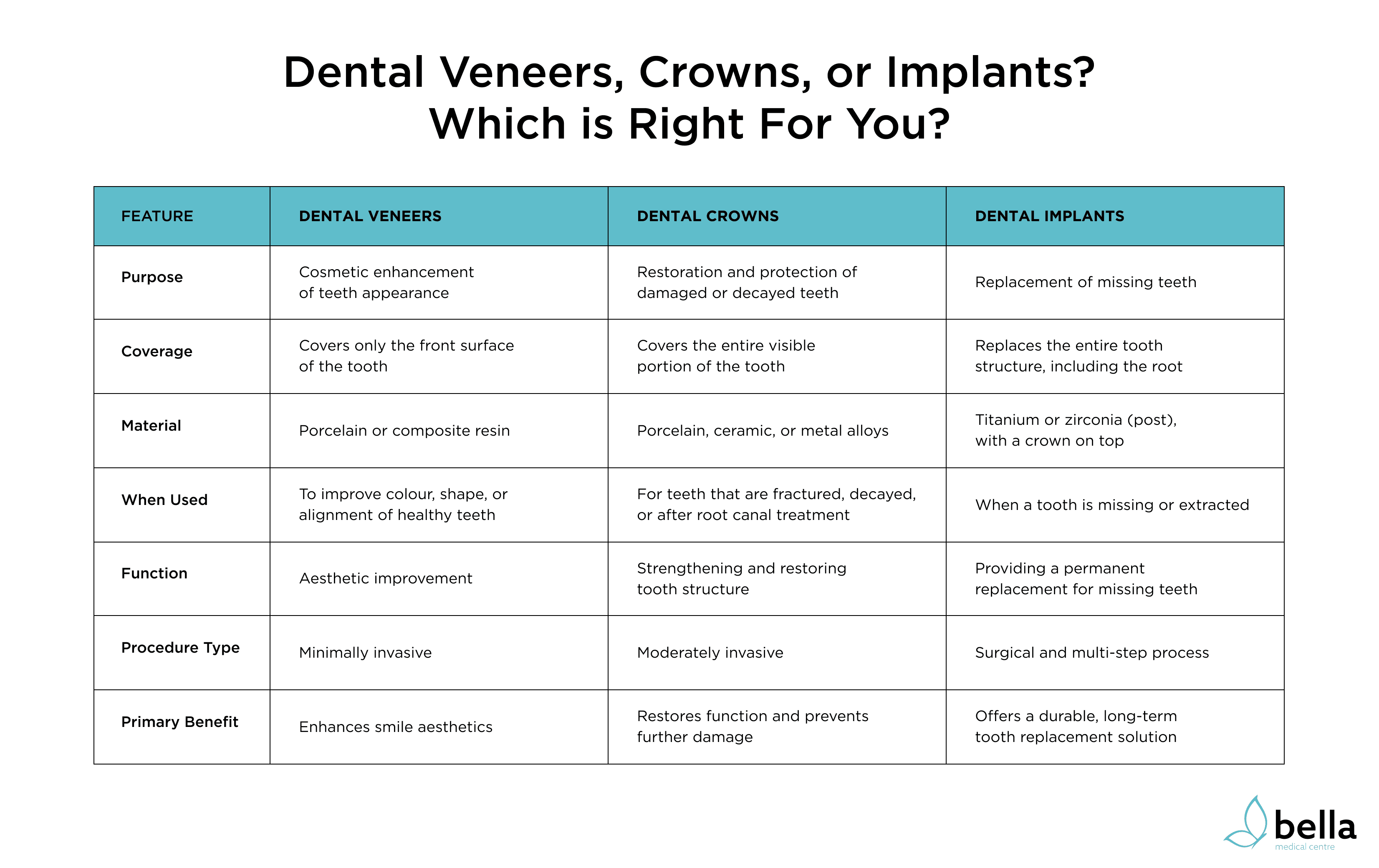
Apart from dental veneers, you may have heard of dental crowns and dental implants to improve the appearance of your smile. While dental crowns, dental implants, and dental veneers all help improve the cosmetic appearance of your teeth, they are used for different purposes.
1. Dental Crowns
Dental crowns cover an entire tooth’s structure to add strength and protection. They cover the whole tooth (not just the front) and are designed to repair and strengthen decaying or damaged teeth.
They are used to build up teeth that are terribly damaged and protect teeth so that they do not deteriorate. A dental crown is used when you have a tooth that’s severely fractured, you have lots of cavities, or you just got a root canal.
2. Dental Implants
Dental implants, on the other hand, are small posts that serve as a substitute for the root of the tooth. They are implanted in a person’s jawbone and are used to replace missing teeth. They provide a solid foundation for a crown or a bridge. The different types of dental implants are endosteal implants, subperiosteal implants, and zygomatic implants.
3. Dental Veneers
Dental veneers are not used for any of the purposes mentioned above for dental crowns and dental implants. They mainly cover the front of the tooth and are more of a cosmetic treatment. Veneers can be placed on a healthy tooth and serve more of an aesthetic purpose, rather than a restorative one.
So, to sum it up, the main purpose of dental crowns is to restore teeth that are badly damaged either by trauma or decay, dental implants are used to replace missing teeth, while dental veneers are used to improve the appearance of teeth that are still intact.
What Are the Benefits of Dental Veneers?

There are numerous benefits of getting dental veneers, and they are as follows:
1. Natural Appearance
You may have lost self-confidence or you may have been smiling less because of stained or misaligned teeth. Dental veneers can enhance the appearance of your smile and boost your self-confidence. They address issues such as stains, discolouration, gaps, and uneven tooth size or shape. They can even make the darkest teeth appear very bright.
Additionally, dental veneers give a natural appearance. They can be personalized to your teeth and customized to meet your needs. They can blend in with your natural teeth and let you smile with confidence.
2. Dental Veneers Resist Stains
Dental veneers are resistant to stains. They are made of high-tech materials and remain white and bright for their lifetime. However, you still need to go get routine dental check-ups for your veneers to remain in good condition.
3. Dental Veneers Last Long
Dental veneers, particularly porcelain veneers, are durable and last long. With proper care, they can last for up to 10 to 15 years.
4. Dental Veneers Are Easy to Maintain
There is no special cleaning process required and no additional maintenance is needed. Like with your natural teeth, brush them and floss to maintain your veneers. To maintain a good condition for your veneers, you only need to brush, floss, and visit your dentist regularly.
5. A Quick Process
Veneer placement is a quick process compared to other orthodontic treatments. It will only require a few appointments to achieve a transformed smile.
Additionally, compared to other dental treatments, veneer placement involves minimal removal of teeth enamel, which preserves more of your natural tooth structure. Your natural teeth will remain largely intact. The procedure is not painful, and there’s no downtime after.
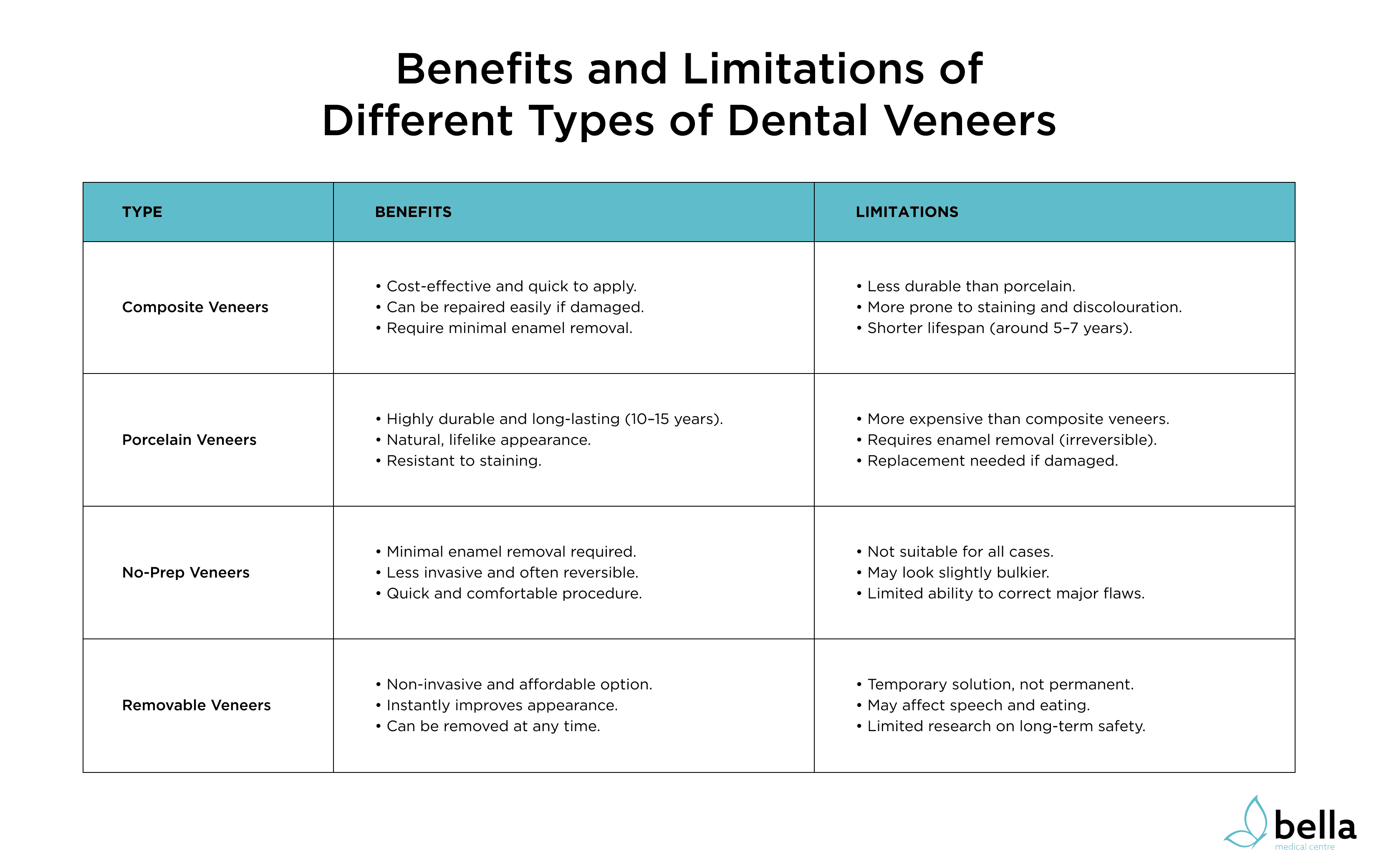
Types of Dental Veneers
Composite Veneers
Composite veneers are ideal for concealing minor cosmetic imperfections. Your dentist applies a tooth-coloured composite resin, the same material used in dental bonding, to reshape and enhance the appearance of your teeth.
Porcelain Veneers
Porcelain veneers can correct a variety of aesthetic concerns. These custom-made restorations are designed to fit your natural teeth precisely. Before they are placed, your dentist removes a small amount of enamel to roughen the surface, allowing the veneers to adhere securely.
No-Prep Veneers
No-prep or minimal-prep veneers offer a less invasive alternative to traditional porcelain veneers. They are also custom-made for your smile but require significantly less enamel removal. However, some preparation is still necessary, and this option may not be suitable for everyone. Your dentist can advise whether you’re a good candidate.
Removable Veneers
Removable veneers, often referred to as pop-on or snap-on veneers, fit over your natural teeth to mask imperfections. Similar to retainers, they can be removed at any time. While they can temporarily enhance your smile, they may affect speech and make eating more difficult. As they are relatively new, research on their long-term safety and effectiveness remains limited. It’s best to consult your dentist before choosing this option.
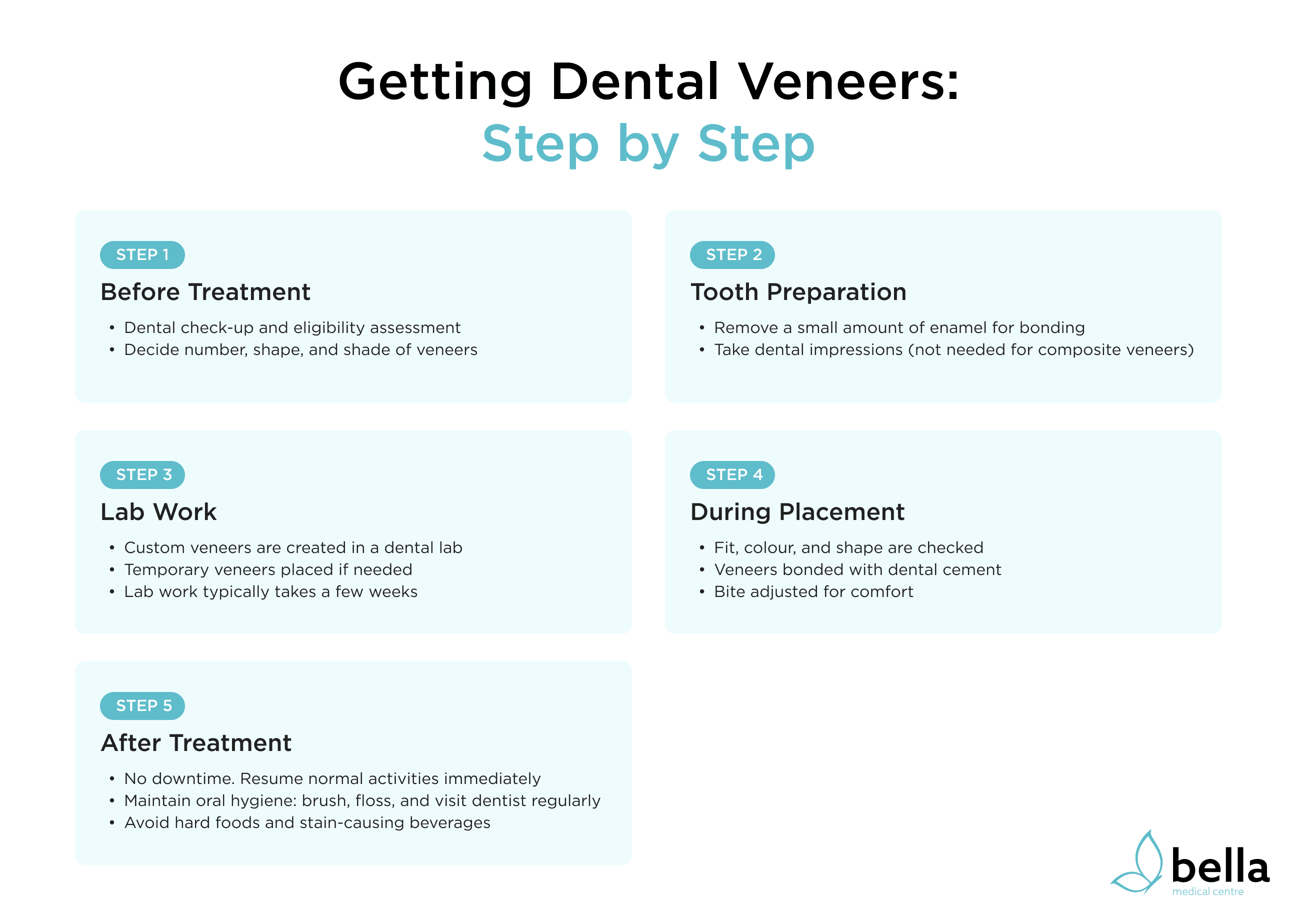
How Does the Procedure for Dental Veneers Work?
Before The Treatment
During your initial consultation, your dentist will examine your teeth and gums to determine whether you are a suitable candidate for veneers. They will also discuss the number of veneers required, along with the desired shade and shape.
For porcelain veneers, a small amount of enamel is removed from the surface of your teeth to allow the veneers to bond securely. Impressions of your teeth are then taken and sent to a dental laboratory to create custom veneers.
If necessary, temporary veneers can be placed while your permanent ones are being prepared. For composite veneers, dental impressions may not be required.
During The Treatment
Once your custom veneers are ready, your dentist will check their shape, colour, and fit before permanently bonding them to your teeth using dental cement. Your bite will be carefully examined, and any necessary adjustments made to ensure comfort and proper alignment.
The procedure is generally painless, and there is no downtime; you can return to your normal activities immediately. Maintaining good oral hygiene is essential to preserve the appearance and longevity of your veneers.
Recovery and Maintenance
After receiving dental veneers, maintaining good oral hygiene is essential to keep them in optimal condition. Brush at least twice daily using a soft-bristled toothbrush and non-abrasive fluoride toothpaste, and floss once a day. Rinse with an antibacterial mouthwash twice daily to help protect your teeth and gums.
Porcelain veneers are stain-resistant, but it is still advisable to limit consumption of dark-coloured foods and drinks such as berries, red wine, coffee, and tea. Avoid using whitening products, as they can scratch the veneers.
Take care not to bite directly into hard foods like apples, carrots, or tough meats; instead, cut them into smaller pieces and chew with your back teeth. Never use your teeth as tools, for example, to open packages or tear tags.
Regular dental check-ups and professional cleanings are crucial to monitor your veneers and ensure long-lasting results. With proper care, veneers can maintain their appearance and functionality for many years.
Cost of Dental Veneers
In the UAE, the cost of dental veneers can vary significantly depending on the type of veneer and the complexity of the treatment. Here is a simple breakdown :
Type of Veneer | Description | Cost in UAE (per tooth) |
Composite Veneers | Made from tooth-coloured resin | AED 800 – AED 1,500 |
Porcelain Veneers | Durable, natural-looking | AED 2,000 – AED 4,000 |
No-Prep / Specialty Veneers | Minimal enamel removal, custom-made | From AED 2,500 |
Key Factors That Affect Cost of Teeth Veneers
Material & Technology: Superior materials (e.g., porcelain, E‑Max) and advanced lab fabrication raise costs.
Number of Teeth Treated: More veneers = higher total cost, though package deals may lower per‑tooth price.
Clinic Location & Facilities: Premium clinics in high‑end locations often charge more due to overheads.
Dentist’s Skill & Lab Quality: Experienced cosmetic dentists and reputable labs add value and cost.
Pre‑ and Post‑Treatment Work: Additional treatments (e.g., teeth cleaning, whitening, gum contouring) can increase the total.
Overall, while veneers represent a significant investment, they offer long-lasting aesthetic improvements and can transform your smile when performed by a skilled cosmetic dentist in the UAE.
Bella Medical Centre’s Hollywood Smile Treatment
Dental veneers and teeth whitening can give you a bright, natural-looking smile, customised to your unique dental structure. To achieve the best results, it’s important to choose a trusted clinic with expertise and advanced technology.
At Bella Medical Centre, our Hollywood Smile treatment combines tailored solutions like dental veneers and professional teeth whitening to address stained, misaligned, or chipped teeth. Our experienced dental team evaluates your smile, recommends the ideal treatment plan, and uses cutting-edge techniques to ensure a safe, effective, and long-lasting transformation.
With personalised care, modern technology, and a focus on comfort, Bella Medical Centre helps you achieve a radiant, confident smile that’s uniquely yours. Contact us today to start your smile transformation.