Most of us have been brushing our teeth since we were toddlers, yet dental professionals frequently report that a significant portion of the population is still getting the basics wrong. While it might seem like a simple mechanical task, the difference between scrubbing and effective cleaning can be the deciding factor in avoiding costly fillings, painful gum disease, and tooth loss.
By adjusting your technique, timing, and post-brushing habits, you can ensure your smile remains healthy and vibrant. This guide outlines the gold standard for oral hygiene and how to brush your teeth combining clinical expertise with a practical approach to daily care.
The Preparation: Choosing Your Tools
Before you even turn on the tap, the tools you use dictate the quality of how you brush your teeth. Contrary to popular belief, a harder bristle does not mean a cleaner tooth.In fact, it often leads to enamel wear and receding gums.
The Toothbrush
Whether you opt for a manual or electric toothbrush is largely a matter of personal preference, as both are effective when used correctly. However, dentists generally recommend a brush with a small head.
A compact head allows you to navigate the tight corners of the mouth, particularly the back of the second molars which are often missed.
Choose soft or medium bristles to protect your gums. If using an electric brush, look for one with a pressure sensor to prevent you from pressing too hard.
The Toothpaste
The most critical component of toothpaste is its fluoride content. Fluoride is a mineral that strengthens tooth enamel and helps repair early stages of tooth decay.
For adults and children over the age of three, experts recommend toothpaste containing 1,350 to 1,500 parts per million (ppm) of fluoride.
Always check the packaging, as some natural or whitening brands may lack this essential ingredient.
Step-by-Step Guide to Brushing Teeth
Brushing should never be a rushed activity. To reach every surface effectively, you should follow a methodical approach that takes at least two minutes.
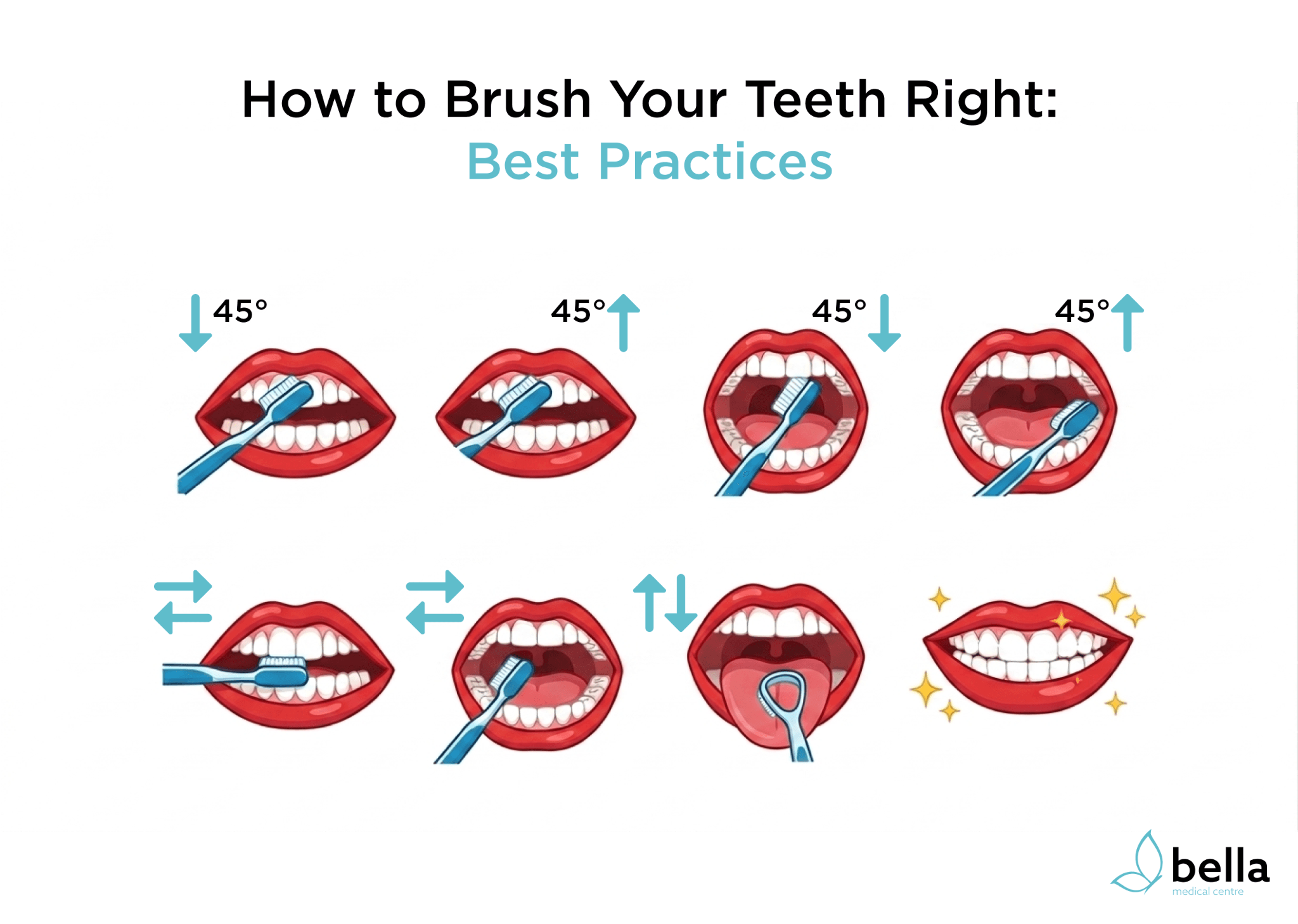
1. The 45-Degree Angle
The most common mistake is brushing flat against the teeth. Instead, place your toothbrush at a 45-degree angle to the gums. This allows the bristles to reach slightly under the gumline, where plaque (a sticky film of bacteria) tends to accumulate and cause gingivitis.
2. Gentle Circular Motions
Avoid the temptation to saw the brush back and forth in long, aggressive strokes. This scrubbing action can damage the delicate gum tissue. Instead, use small, gentle circular or vibrating motions. If you are using an electric toothbrush, you do not need to brush at all, simply guide the vibrating head slowly from tooth to tooth, allowing the device to do the work.
3. The Three Surfaces
Every tooth has three main areas that require attention:
Outer Surfaces: The side facing your cheeks and lips.
Inner Surfaces: The side facing your tongue or the roof of your mouth. This is where most people rush, leading to tartar build-up.
Chewing Surfaces: The flat tops of your molars. Use a light back-and-forth motion here to clear food debris from the deep grooves.
4. Vertical Cleaning for Front Teeth
To clean the inside surfaces of your front teeth (the incisors), tilt the brush vertically. Use several up-and-down strokes with the front half of the brush head to ensure you reach the areas where saliva tends to pool and mineralise into tartar.
5. Don’t Forget the Tongue
Bacteria don’t just live on your teeth, they thrive on the tongue’s surface, contributing to bad breath (halitosis) and further plaque formation. Gently brush your tongue from back to front at the end of your routine.
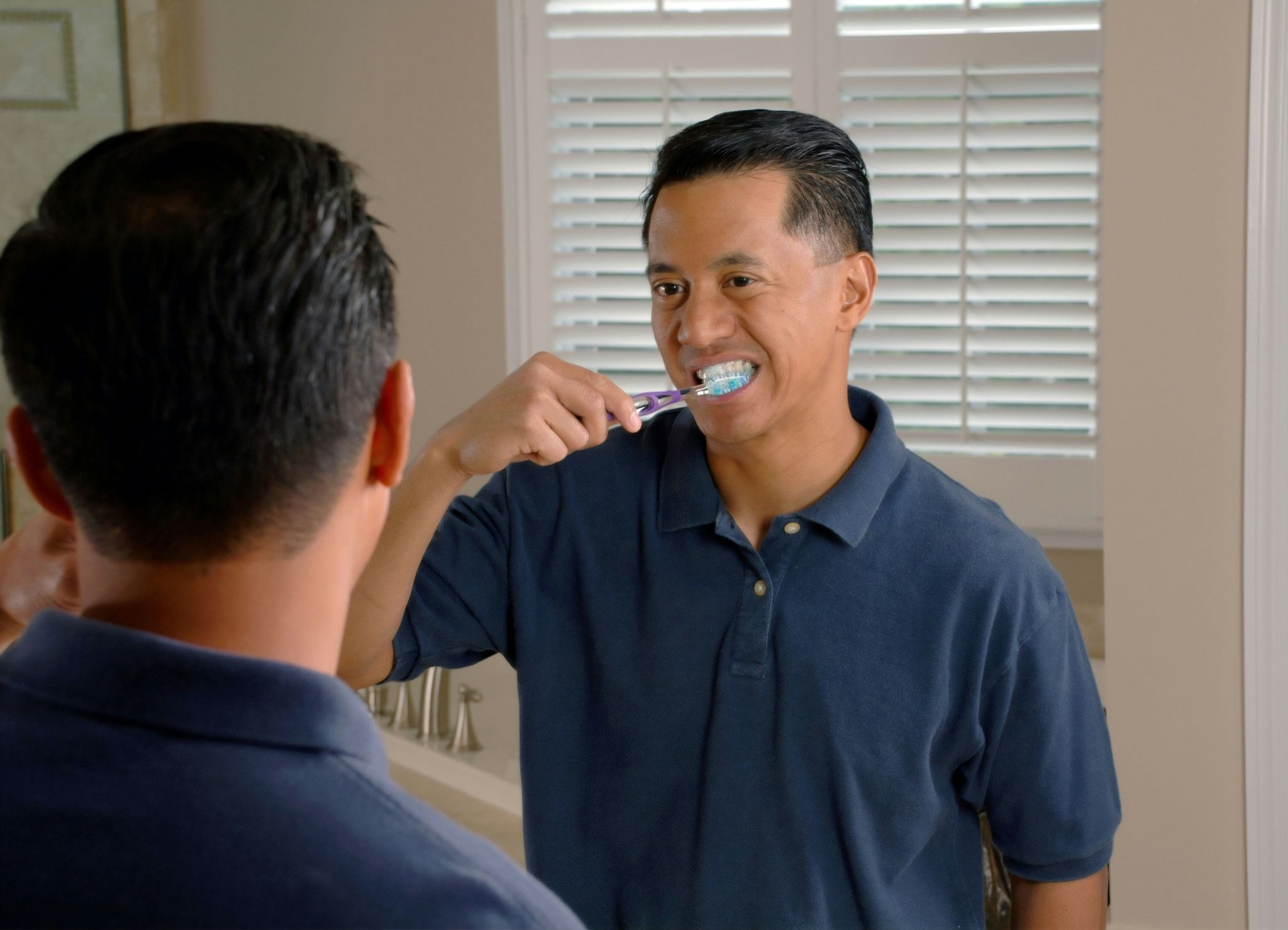
The Golden Rule: Spit, Don't Rinse
This is the most contested piece of advice for those who grew up rinsing their mouths with water or mouthwash immediately after brushing. However, the consensus among dental experts is to spit out excess toothpaste and avoid rinsing.
When you rinse with water, you wash away the concentrated fluoride that is meant to sit on your teeth and strengthen the enamel. By leaving a thin film of toothpaste in your mouth, you provide a treatment that continues to work long after you have left the bathroom.
Similarly, avoid using mouthwash immediately after brushing for the same reason. If you wish to use mouthwash, do so at a different time of day, such as after lunch.
Timing and Frequency
The 2x2 rule, brushing for two minutes, twice a day,remains the industry standard.
The most important time to brush is last thing at night before you go to bed. During sleep, your saliva production (which naturally neutralises acids) decreases significantly.
If plaque and food particles are left on the teeth overnight, bacteria have a free pass to produce acid and erode your enamel for several hours. Your second brushing session should occur at one other point during the day, typically in the morning.
A Note on Breakfast and Diet
Many people brush immediately after eating breakfast. However, if you have consumed acidic foods or drinks, such as orange juice, coffee, or fruit, your enamel is temporarily softened. Brushing immediately can actually wear down the enamel.
It is better to brush your teeth before breakfast or wait at least 30 to 60 minutes after eating to allow your saliva to re-mineralise the enamel. This is particularly relevant in climates where frequent snacking or sweetened beverages are common.
Beyond the Brush: Interdental Cleaning
No matter how perfect your brushing technique is, a toothbrush cannot reach the 35% of tooth surfaces that touch the adjacent teeth. Interdental cleaning is not an optional extra; it is an essential part of the process.
For most adults, interdental brushes (small, Christmas-tree-shaped brushes) are more effective than traditional floss at removing plaque from between the gaps. If your gaps are very tight, dental tape or floss may be necessary.
Aim to clean between your teeth at least once a day, ideally before you brush, so that the fluoride in your toothpaste can reach those freshly cleared spaces.

Maintenance and Replacement
A worn-out toothbrush is an ineffective one. Frayed or splayed bristles cannot reach into the nooks and crannies of your teeth and may even irritate your gums. You should replace your manual toothbrush or electric brush head every three months, or sooner if you have recently been ill to avoid harbouring bacteria.
Summary Checklist for Daily Success
To ensure you are brushing the right way, keep these professional tips in mind:
Use a pea-sized amount of 1,350 to 1,500 ppm fluoride toothpaste.
Angle at 45 degrees towards the gumline.
Spend 30 seconds per quadrant (top-right, top-left, bottom-right, bottom-left).
Be gentle: Think of it as massaging your teeth and gums rather than scrubbing them.
Spit, don’t rinse: Keep that fluoride on your teeth.
Clean between the teeth daily using interdental brushes or floss.
By following these evidence-based steps, you move beyond mere cleaning and into the depth of preventative healthcare. A few minutes of disciplined, correct technique every day is the most effective investment you can make in your long-term health and wellbeing. Consistently applying these methods will result in a cleaner mouth, fresher breath, and fewer visits to the dentist for corrective procedures.